When oil prices rise, most people think about the obvious issue of increasing fuel and energy costs and the effect it has on filling up at the pump and the trucking and transportation industry. But the reality is so much broader. Oil, and what it costs and its availability, is embedded in far more of the economy than just fuel costs for logistics.
From manufacturing to agriculture to everyday materials, the cost of oil and rising fuel and energy costs create a ripple effect that impacts nearly every business. For small and mid-sized companies, those effects often show up as supply-chain issues, higher expenses, tighter margins, and increased pressure on cash flow.
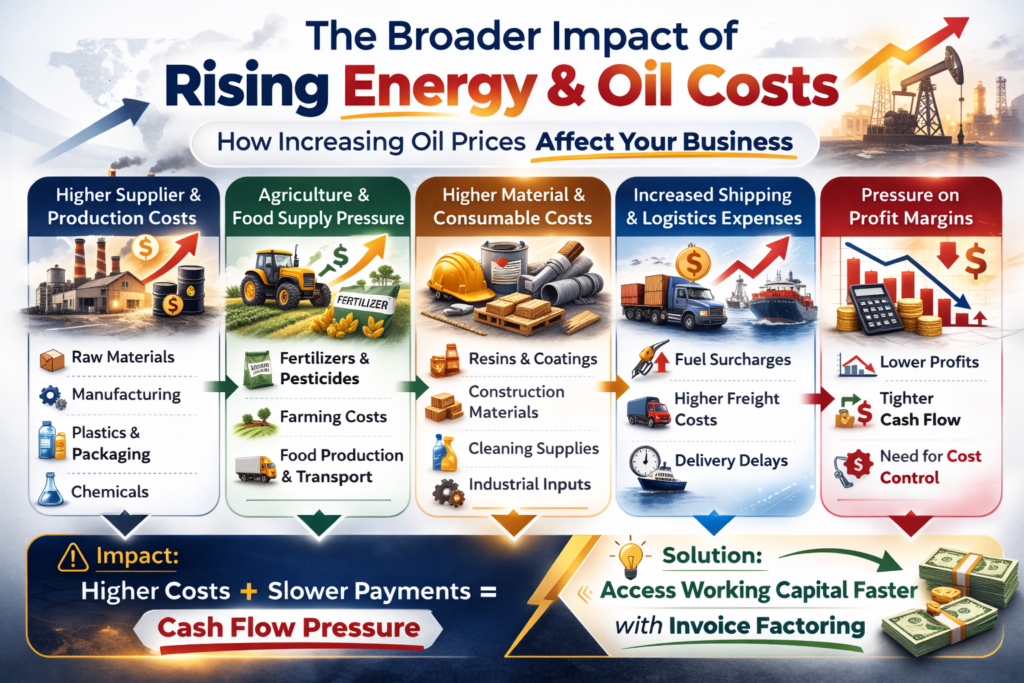
The Broader Impact of Rising Energy and Oil Costs
Fuel is just one part of the story. Many products and processes rely directly on oil or energy-intensive production methods.
In practical terms, this means:
1. Higher Supplier and Production Costs
Oil is a key input in manufacturing, not just for energy, but as a raw material. Products like plastics, packaging, chemicals, and cleaning supplies are all oil dependent. As oil prices rise, so do production costs, which are often passed on to your business.
2. Agriculture and Food Supply Pressure
Farming relies heavily on both fuel and oil-based products such as fertilizers and pesticides. When energy costs increase, so does the cost of producing and transporting food impacting businesses across the supply chain.
3. Increased Cost of Materials and Consumables
Industries like construction, janitorial, and manufacturing feel this directly. Many of the materials they rely on such as resins, coatings, chemicals, and other inputs, are derived from oil or require energy-intensive processing.
4. Higher Shipping and Logistics Expenses
Transportation costs still play a massive role in rising costs. Carriers adjust rates or add a fuel surcharge as fuel prices rise, increasing the cost of moving goods at every stage.
5. Pressure on Profit Margins
These combined pressures can be difficult to pass on immediately to customers, leading to lower profits requiring more careful cost management.
Why This Becomes a Cash Flow Challenge
The biggest issue isn’t just higher costs. It’s timing.
Expenses rise quickly, often with little warning. Supply chain problems result in higher prices as demand can’t be met. You may need to find alternative vendors if orders can’t be fulfilled and they may require cash up front or charge you more. But incoming payments may still follow standard terms —30, 60, or even 90 days. That creates a gap between when cash goes out and when it comes in.
For many businesses, that gap leads to:
- Issues with paying vendors or meeting payroll deadlines
- Increased reliance on existing cash reserves
- Delayed investments or purchasing decisions
- Reduced flexibility to respond to new opportunities
Even businesses with strong sales can feel this strain.
How Businesses can Stay Ahead
Businesses that navigate rising cost pressures effectively take a proactive approach:
- Monitoring supplier pricing and cost trends more closely
- Adjusting pricing strategies where appropriate
- Improving visibility into cash flow and forecasting
- Streamlining internal processes to reduce inefficiencies
- Finding ways to access working capital more quickly
The goal is not just to manage costs, but to maintain control and flexibility.

Turning Receivables into Working Capital
One practical way to manage cash flow during periods of rising costs is to unlock the value tied up in accounts receivable.
Instead of waiting weeks or months for customer payments, businesses can access that cash immediately. This helps:
- Cover increased operating costs without disruption
- Maintain steady operations
- Reduce reliance on short-term borrowing
Solutions like invoice factoring allow businesses to convert receivables into working capital without taking on additional debt or fixed repayment schedules.
Stay Ahead of Cost Pressures
Rising oil, fuel and energy costs are just part of a current trend. Ongoing uncertainty is putting pressure across multiple industries, driven by volatility in energy, materials, and supply chains as a whole contributing to wider economic instability, increasing recession concerns, and the likely tightening the availability of capital for many businesses as lenders become more conservative.
While you can’t control those external factors, you can control how your business responds. With the right visibility and access to working capital, you can stay ahead of challenges instead of reacting to them.
At Eagle Business Credit, we work with businesses across a wide range of industries to help improve cash flow, increase financial flexibility, and support growth. No matter what the market conditions are or what the economy is doing.
Call us today to see what we can do for you.
Useful Links to Other Articles:
The Relationship Between Working Capital Management & Business Success
The Importance of Working Capital in Business Operations: Do you need more?
Financial Management Tips for Small Businesses | Eagle Business Credit