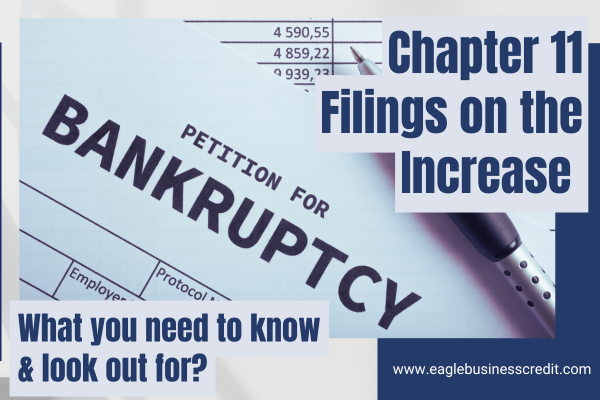
Year over year, Chapter 11 bankruptcy filings are up a staggering 78% *. For business owners, this statistic should be more than a headline—it’s a clear warning sign of how the economy is performing.
Whether you’re a startup, a growing operation, or a long-standing business, it’s important to understand why so many companies are seeking court protection and how to stay ahead of financial trouble.
To help you better understand what all this indicates and why it matters to you, we’ll break down what this trend means, what drives a business to file for Chapter 11, and what steps you can take to protect your business now so you won’t have to.
Why Are Chapter 11 Filings on the Rise?
A 78% increase in Chapter 11 filings signals that many businesses are under pressure. Here are some of the biggest reasons why:
1. High Interest Rates
Borrowing costs remain high, and businesses that rely on loans to manage cash flow or finance growth are struggling to keep up with payments as rates are not being reduced in line with previous predictions.
2. Inflation and Cost Increases
Higher prices for materials, labor, and transportation are squeezing profit margins. Many companies can’t raise their own prices fast enough to keep up.
3. Unsustainable Debt Levels
Some businesses took on too much debt during the pandemic or post-pandemic recovery and now face payments they can’t manage, particularly given the increase in interest rates since that time.
4. Declining Revenue
A drop in sales—due to economic slowdown, shifting customer behavior, or increased competition—can quickly make it impossible to cover fixed expenses, and getting a new loan or line of credit extremely difficult as banks consider you to be a higher risk.
5. Cash Flow Problems
Even profitable companies can run into trouble if they don’t have enough working capital to cover day-to-day operations.
6. Uncertainty Around Tariffs and Trade Policies
Ongoing changes to U.S. trade policy and potential increases in tariffs are creating significant uncertainty for businesses that rely on imported materials, parts, or goods. Companies are struggling to predict costs and plan for the future, making it harder to maintain stable operations or pricing. For some, the unknown impact of tariffs has pushed already tight margins into unmanageable territory.
What Is Chapter 11 Bankruptcy?
Chapter 11 bankruptcy is a legal process that allows a struggling business to reorganize its debts under court supervision, while continuing to operate.
Rather than shutting down (like in a Chapter 7 liquidation), Chapter 11 gives the company a chance to restructure contracts, renegotiate debt terms, and develop a plan to return to profitability—all while receiving temporary protection from creditors.
Key Features of Chapter 11:
- The business becomes a “debtor-in-possession” (DIP), meaning it remains in control of its assets and operations during the restructuring process.
- Creditors are temporarily blocked from taking collection actions like lawsuits, liens, or foreclosures.
- The business proposes a reorganization plan that outlines how it will repay debts over time—sometimes at reduced amounts or over extended terms.
- The plan must be approved by the bankruptcy court and in many cases, by the company’s creditors.
What is DIP Financing?
Many businesses in Chapter 11 need additional funds to continue operating during the process—especially when existing credit lines are frozen or cash flow is tight. That’s where DIP (Debtor-in-Possession) financing comes in.
Debtor in Possession financing is a special type of funding approved by the bankruptcy court that provides working capital to businesses during their Chapter 11 case.

Why DIP Financing Matters:
- It helps cover critical expenses like payroll, rent, and vendor payments.
- It keeps the business running while it works on its recovery plan.
- DIP lenders often get priority repayment status, making it a viable option even for companies already deep in debt.
For many companies, securing DIP financing is the difference between surviving Chapter 11 and being forced to liquidate and close forever.
How Does a Business Exit Chapter 11?
Exiting Chapter 11 typically involves the following steps:
Proposal of a Reorganization Plan
The business outlines how it will operate going forward, what debts will be repaid or forgiven, and how creditors will be treated.
Creditor and Court Approval
The business creditors may vote on the plan, and the bankruptcy court must formally approve it.
Implementation of the Plan
Once approved, the company begins executing the plan—making payments, restructuring operations, and potentially shedding unprofitable divisions or assets.
Discharge and Exit
When the plan is completed or meets key milestones, the business exits Chapter 11 and resumes normal operations, often with a cleaner balance sheet and improved cash flow.
Note: Not all Chapter 11 cases are successful. Some businesses may convert to Chapter 7 if the plan can’t be approved or funded.
Chapter 11 Isn’t Just for Big Companies
While headlines often feature large corporations like Sears, J.C. Penney, Hertz, or Bed Bath & Beyond filing Chapter 11, small and mid-sized businesses are increasingly using it as a tool to reset financially—especially with the expanded Subchapter V process introduced to streamline filings for smaller companies.
That said, Chapter 11 is complex, extremely expensive, and time-consuming. It’s best used only as a last resort—after exploring other cash flow and funding options.
What Are the Most Common Reasons Businesses File Chapter 11?
While every situation is unique, most Chapter 11 filings fall into a few common categories:
➤ Cash Flow Shortages
Not enough cash coming in to pay vendors, employees, or creditors—often caused by slow-paying customers or unplanned expenses.
➤ Poor Financial Planning
Lack of budgeting, forecasting, or financial oversight can lead to overspending and unsustainable debt.
➤ Over-Reliance on Credit
Using credit cards, loans, or lines of credit to cover routine expenses can spiral out of control if revenue drops or rates rise.
➤ Sudden Revenue Disruption
Losing a major customer or contract can destabilize a business overnight, especially if there’s no backup revenue stream.
➤ Breaking Out of Costly Lease Agreements
Gives a business the legal ability to reject or renegotiate commercial leases that are no longer financially viable. For companies locked into expensive or underutilized office, retail, or warehouse spaces, this can prove to be a strategic move to reduce overhead and restructure operations more sustainably.
➤ Legal Issues or Lawsuits
Unexpected legal expenses can quickly drain resources and damage a business’s reputation or creditworthiness.
Why Monitoring Your Customers’ Financial Health Matters
It’s not just your business you need to watch—your customers’ financial stability can impact your cash flow and risk exposure if they ultimately can’t pay you.
If a customer files for Chapter 11, you could be left waiting months—or never be paid at all—for outstanding invoices. In bankruptcy proceedings, you’ll be considered an unsecured creditor, which means you’re last in line to get paid, if at all.
That’s why it’s critical to monitor your customer base for early warning signs, including:
- Consistent late payments or requests for extended terms
- Sudden changes in purchasing behavior
- Staff changes, news of layoffs, downsizing, or location closures
- Declining communication or missed commitments
Acting early can protect your business—by reducing credit limits, tightening payment terms, or even requiring prepayment when risk levels rise.
At Eagle Business Credit, we help our clients monitor the creditworthiness of their customers as part of our factoring service—so you’re not left chasing payments from a company that’s headed for bankruptcy.
How to Stay Out of Financial Trouble
At Eagle Business Credit, we help businesses stay ahead of cash flow challenges by providing fast, flexible working capital through invoice factoring. Instead of waiting 30, 60, or even 90 days to get paid by customers, you get cash immediately to cover payroll, rent, supplies, and more.
With factoring, you can:
- Get paid same-day for your invoices
- Maintain consistent cash flow
- Avoid taking on more debt
- Focus on growth, not collections
- Access important credit information relating to your customers ability to pay
- Receive credit protection through a non-recourse factoring program

Bottom Line
A 78% increase in Chapter 11 filings is a clear sign that many businesses are feeling the squeeze more than ever. But financial stress doesn’t have to lead to bankruptcy.
If your business is facing delayed payments, rising expenses, or financing issues—now is the time to act. With the right cash flow solutions, you can gain easy access to working capital and build a more resilient business but, if you are already considering or going through Chapter 11, Eagle Business Credit can provide debtor in possession financing to help maintain operations and support your restructuring plan.
Need help with your cash flow?
Talk to the team at Eagle Business Credit today to see how invoice financing can work for you and is always one of the best funding option for small businesses whatever the economy is doing.
Call us at (855) 420-8318
www.eaglebusinesscredit.com
* According to data provided by Epiq AACER, the leading provider of U.S. bankruptcy filing data.